Why Do Some Adhesives Fail on Certain Surfaces?
Glue that grips wood and metal can peel off a plastic tub. Surface energy, contamination, migrating additives and joint design explain why some bonds never hold.
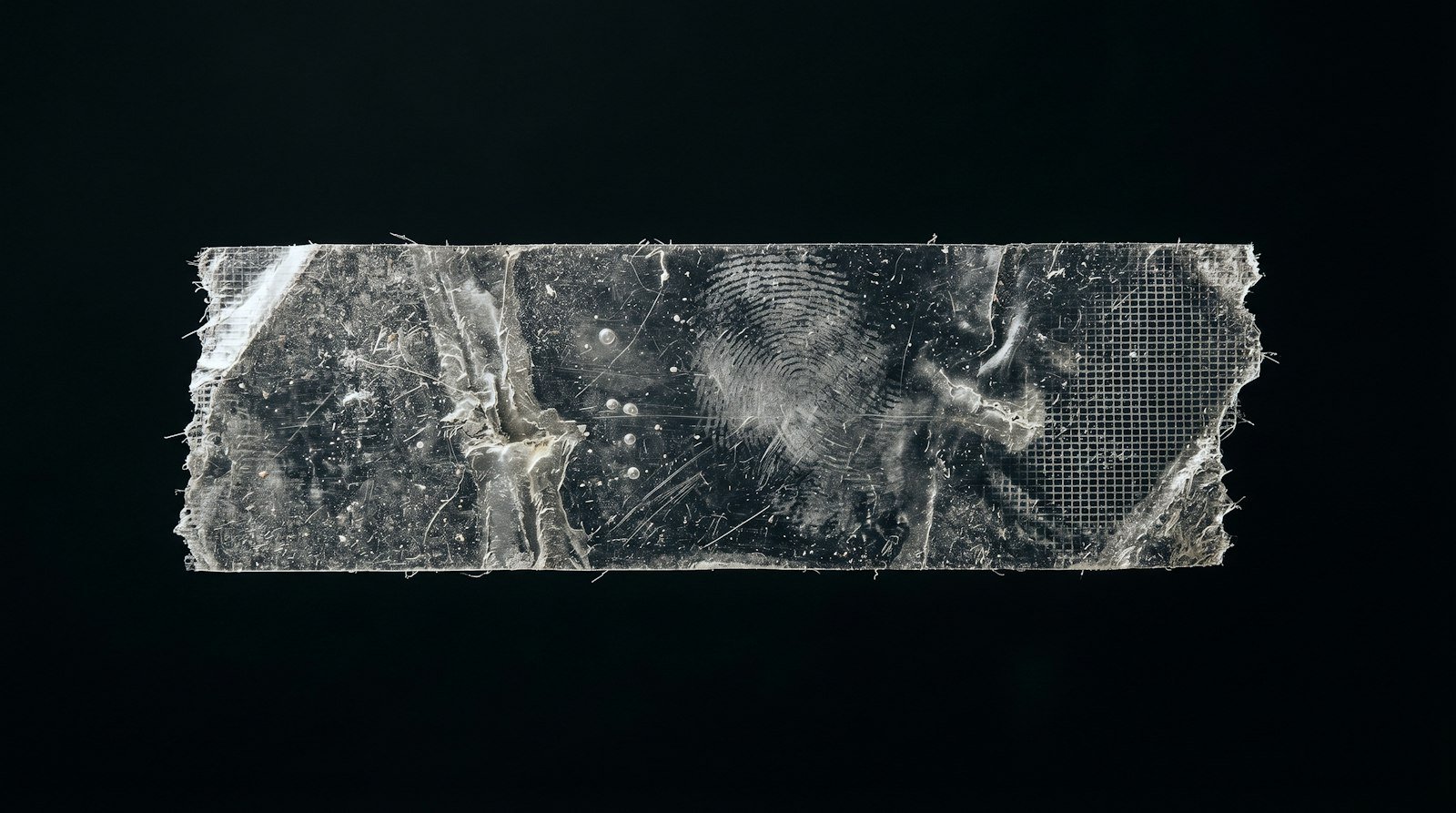
A glue that holds wood, card and metal with ease can peel cleanly off a plastic food tub, a chopping board or a non-stick pan. Tape that grips a painted wall well may gradually lose its hold on a flexible vinyl banner. It is tempting to blame a weak product, but often the adhesive itself is fine. The problem lies in the surface it was asked to stick to.
Understanding why bonds fail on certain surfaces helps when choosing an adhesive, preparing a repair, or working out what went wrong. The reasons come down to a handful of physical and chemical effects: how well the liquid adhesive can spread, what is sitting on the surface, what is moving out of the material, and how the joint is loaded.
The short answer
- An adhesive must first wet the surface, spreading into close contact with it. Low-surface-energy plastics such as polyethylene, polypropylene and PTFE resist wetting, so the adhesive beads up and grips poorly.
- Invisible contamination, especially oils and silicones, can block adhesion even on surfaces that would normally bond well.
- Some materials release additives, such as the plasticisers in flexible PVC, that soften the adhesive over time.
- Peeling loads concentrate stress at the edge of a bond, and temperature changes strain joints between materials that expand differently; both can break even a well-made joint.
The basic principle: an adhesive has to wet before it can stick
Adhesion happens at the molecular scale. For the forces between adhesive and surface to act, the liquid adhesive must flow into intimate contact with the surface, including its microscopic hills and valleys. This spreading is called wetting. If the adhesive cannot wet the surface, it touches only at scattered points and the bond is weak however strong the adhesive is once cured.
Whether a liquid spreads or beads depends on surface energy, a measure of how strongly the molecules at a material’s surface attract other molecules. A water drop on a freshly waxed car beads up because the wax has low surface energy; the same drop on clean glass spreads out because glass has high surface energy. Adhesives behave in the same way.
How it works, step by step
- Application. The adhesive is applied as a liquid, or as a soft, tacky solid in the case of pressure-sensitive tapes.
- Wetting. The adhesive spreads over the surface. On a high-energy surface it flows into a thin, continuous film; on a low-energy surface it pulls back into droplets and leaves gaps.
- Contact at the molecular level. Where wetting is good, the adhesive’s molecules come close enough to the surface for attractive forces, and in some cases chemical bonds, to form.
- Setting or curing. The adhesive hardens by drying, cooling or chemical reaction, or in the case of tape remains a viscous solid that resists flow.
- Service. The joint is loaded by weight, movement, temperature changes and moisture. A bond can fail at the interface between adhesive and surface (adhesive or interfacial failure), within the adhesive itself (cohesive failure), or by tearing the material being bonded (substrate failure).
The science behind it
Surface energy and contact angle
Scientists judge wetting by the contact angle, the angle a liquid drop makes with the surface where its edge meets the solid. The engineering research organisation TWI sets out the standard relationship known as Young’s equation:
γSV = γSL + γLV cos θ
Here γSV is the surface energy of the solid, γLV the surface tension of the liquid, γSL the energy of the interface between them, and θ the contact angle. In plain terms, the higher the solid’s surface energy relative to the liquid’s surface tension, the smaller the contact angle and the better the wetting. A trade article in Machine Design summarises the practical rule: contact angles above 90° indicate a surface that is hard to wet, and angles below 90° a surface that is easier to wet.
Why some plastics are so hard to bond
3M groups materials into three broad bands of surface energy, usually quoted in dynes per centimetre (numerically the same as millinewtons per metre):
| Category | Typical surface energy | Examples |
|---|---|---|
| High | hundreds to thousands of dynes/cm | Many metals, glass |
| Medium | about 36 to about 300 dynes/cm | Many engineering plastics, wood, stone, concrete |
| Low | below 36 dynes/cm | Polypropylene, polyethylene, PTFE |
Machine Design gives specific values: about 840 dynes/cm for properly prepared aluminium, about 30 for polypropylene and polyethylene, and 19 for PTFE, a polymer that Germany’s Federal Institute for Risk Assessment (BfR) notes is often used as the non-stick coating on pans. It also gives a guideline that the surface should ideally have an energy 7 to 10 dynes/cm higher than the adhesive.
Approximate worked example: using that guideline, bonding polyethylene at about 30 dynes/cm would call for an adhesive with a surface tension of roughly 20 to 23 dynes/cm (30 minus 7 to 10). An adhesive with a higher surface tension than that will tend to bead rather than spread. For PTFE, at about 19 dynes/cm, the same rule would require an adhesive at only about 9 to 12 dynes/cm, which helps explain why PTFE is so hard to bond with conventional adhesives.
Contamination: the invisible barrier
A surface that should bond well can behave like a low-energy one if it is coated with something else. Oils, grease and fingerprints are common culprits. The UK National Physical Laboratory’s good practice guide on surface testing for bonding states that unsatisfactory surface preparation results in premature and unpredictable interfacial failure. It also notes that high-energy surfaces tend to pick up moisture and dust from the air, which reduces their wettability, and recommends bonding soon after surface treatment.
Silicones are a particularly stubborn contaminant. In a white paper on silicone contamination published by Omnexus, Edward M. Petrie explains that once silicone is on a surface, other adhesives, sealants and coatings will not wet or bond to it. He reports that as little as about half a single molecular layer of silicone can severely reduce bond strength, that silicone can spread through a workshop by contact or through the air, and that solvent wiping seldom restores full bond performance.
Additives that migrate out of the material
Some plastics are not stable partners for an adhesive because they contain mobile ingredients. Flexible PVC is made soft by plasticisers, oily additives that are not chemically bonded to the polymer. A technical bulletin from Avery Dennison explains that plasticisers can migrate into a pressure-sensitive adhesive, softening it and reducing its internal (cohesive) strength, which can make decals wrinkle or lift in ridges, a defect known as tunnelling. Heat, pressure, solvents and time all speed this up, and the bulletin notes that migration cannot be halted, only controlled with barrier layers or adhesives formulated to resist it. Materials also change as they age; the site’s articles on why plastics turn yellow and why rust spreads beneath paint look at related surface processes.
How the joint is loaded
3M’s guidance on stress in adhesive joints distinguishes forces spread over the whole bond (tension, compression and shear) from forces concentrated at one edge (cleavage and peel). Peel, where one part is flexible, concentrates the load at the leading edge even more than cleavage. Adhesives and tapes perform best when the load is spread over the whole bond area and worst when it is concentrated along a line. That is why a strip of tape that easily holds a heavy sliding load can be peeled off by hand.
Thermal expansion mismatch
Materials expand and contract at different rates as temperature changes. When two different materials are bonded, or when the adhesive expands differently from the surfaces it joins, the bond line is strained every time the temperature cycles. Master Bond gives typical coefficients of thermal expansion of 40–50 parts per million per °C for unfilled rigid epoxy and 80–150 ppm/°C for flexible, toughened epoxies.
Approximate worked example: a 100 mm length of rigid epoxy at 45 ppm/°C, warming by 40 °C, would grow by about 100 × 0.000045 × 40 ≈ 0.18 mm if unrestrained. If the surfaces on either side expand by a different amount, that difference has to be absorbed as stress in the bond. Repeated cycling can eventually crack a rigid adhesive or detach it at the interface.
Real-world applications
- Surface treatment in manufacturing. Flame, corona discharge and plasma treatments, as well as chemical etching, raise the surface energy of plastics so adhesives, inks and paints can wet them. Machine Design notes that the effect of such treatments may last only minutes, days or weeks, depending on the plastic.
- Primers and special adhesives. Polyolefin primers used before cyanoacrylate (superglue-type) adhesives, and some structural acrylic adhesives, are designed to bond low-surface-energy plastics without extensive treatment.
- Tapes for difficult plastics. Tape adhesives can be formulated with lower surface tension, using additives called tackifiers, so they wet plastics with surface energies of about 30 dynes/cm or more.
- Quality control. Contact angle and related surface tests are used to check that parts are clean and properly treated before bonding.
Common misconceptions
‘If it will not stick, use a stronger glue’
A stronger adhesive does not help if it cannot wet the surface. An adhesive that is very strong in itself can still separate cleanly from a surface it never properly wetted. That clean separation, with no adhesive left behind on one side, is a sign of interfacial failure rather than a weak adhesive.
‘Roughening the surface always solves the problem’
Abrasion removes weak surface layers and increases the bonding area, and the NPL guide lists these among the purposes of surface preparation. But it describes abrasion as a passive treatment that changes surface shape rather than chemistry. On low-surface-energy plastics, the chemistry is the main obstacle, which is why active treatments or specialist adhesives are used.
‘A quick wipe with solvent makes any surface clean’
Solvent cleaning is useful, but it is not universal. According to Petrie, solvent wiping usually helps with silicone contamination yet seldom brings bond strength back to its original level, and no single cleaner removed every type of silicone.
‘When a bond fails, the glue was faulty’
Looking at the broken joint tells a lot. Adhesive left on both surfaces suggests the adhesive itself gave way; adhesive left entirely on one side points to a problem at the other surface. Petrie also notes that what looks like the adhesive letting go of the surface can actually be a failure within a thin layer of silicone contamination.
Limitations and exceptions
- Surface energy is not the whole story. Medium- and high-energy surfaces can still be difficult to bond, and roughness, porosity and coatings all affect the result.
- Treatments are temporary on some plastics. Treated surfaces may need to be bonded promptly to get the full benefit.
- Real joints differ from test pieces. Contamination, the direction of loading and temperature cycling, all described above, can reduce strength in service, so it is sensible to allow a margin of safety.
- Safety. Primers, solvents and flame or plasma treatments carry hazards. Follow the manufacturer’s safety data sheet, work with adequate ventilation, and use a qualified engineer for any bonded joint that carries a structural or safety-critical load.
Frequently asked questions
Why will nothing stick to my non-stick pan?
Non-stick coatings are often made of PTFE, which has a very low surface energy of about 19 dynes/cm. Food residues and conventional adhesives wet it poorly, which is exactly the property the coating is chosen for.
How can I tell whether a plastic will be hard to glue?
If the item is marked as polyethylene (PE, HDPE or LDPE) or polypropylene (PP), expect difficulty: these are low-surface-energy plastics. Choose an adhesive, primer or tape specifically labelled for them.
Why does tape fall off a vinyl banner but not off a wall?
Flexible vinyl contains plasticisers that can migrate into the tape’s adhesive and soften it. A surface without mobile plasticisers does not attack the adhesive in this way.
Does cleaning with alcohol help?
Cleaning removes loose dirt and many oils, and is a sensible first step. It does not change the underlying surface energy of a material such as polypropylene, and it may not fully remove silicone contamination.
References
- 3M. Categorising Surface Energy.
- 3M. Common Stress Types in Adhesive Joints.
- Machine Design. Special Techniques and Adhesives Needed to Bond Low-Surface-Energy Plastics.
- Permabond. Surface Energy & Wetability.
- B. Duncan, A. Maxwell and D. Leatherdale. Good Practice Guide No. 77: Surface Testing for Bonding. National Physical Laboratory, issue 2, 2025.
- E. M. Petrie. Addressing Silicone Contamination Issues. Omnexus, 2013.
- Avery Dennison Graphics Solutions. Instructional Bulletin 1.04: Plasticiser and Migration.
- Master Bond. How to Manage Stresses Caused By CTE Mismatches.
- Bundesinstitut für Risikobewertung (BfR). Selected questions and answers on cookware, ovenware and frying pans with a non-stick coating made of PTFE.
- TWI. What is Meant by Wetting and How Can it be Used?
Header photo: Alan Aprilio on Unsplash.