Why Does Concrete Develop Hairline Cracks?
Concrete shrinks as it dries and is weak in tension, so restrained slabs and walls crack. Here is why hairline cracks form, which ones matter and how joints help.
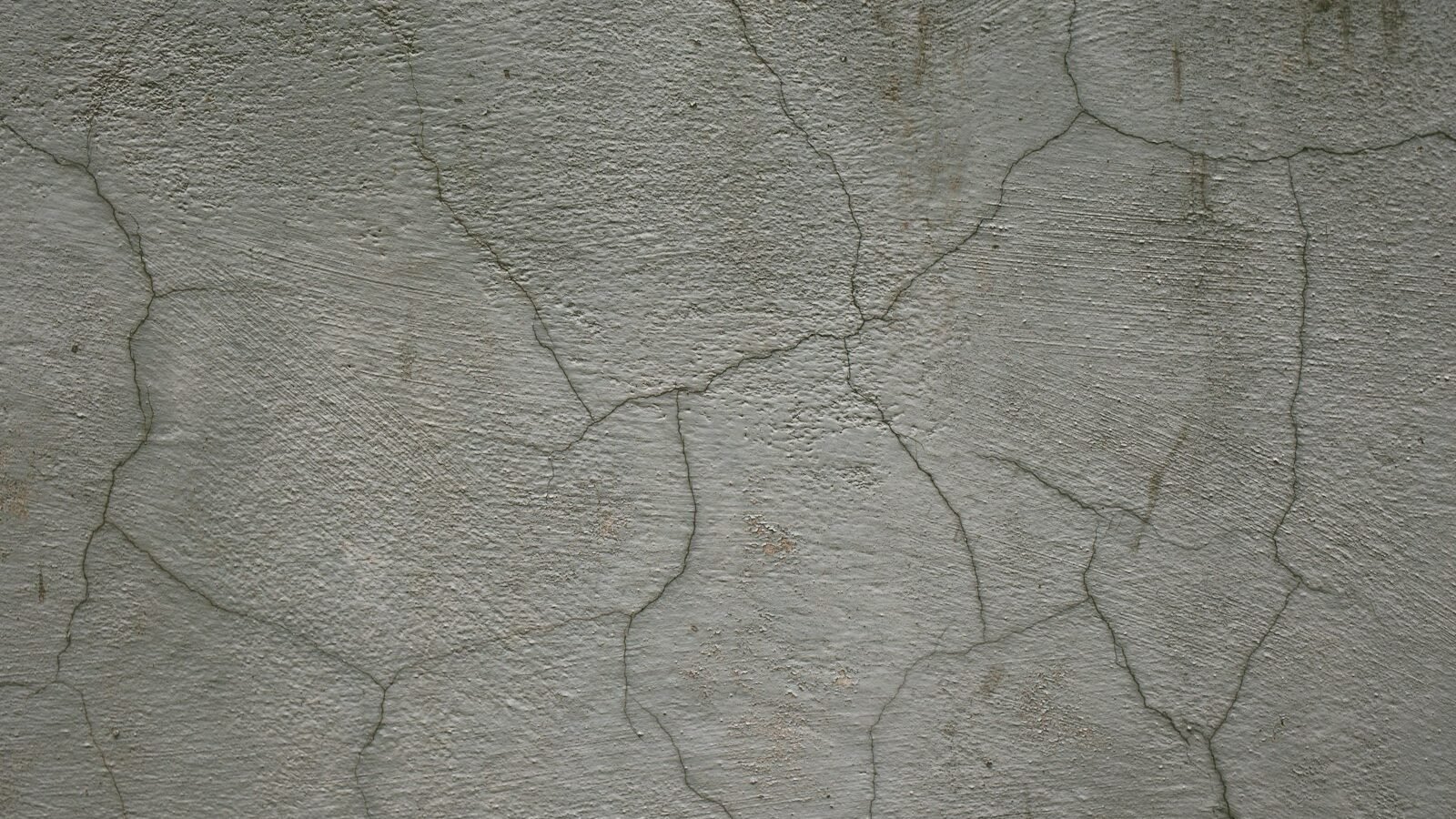
Walk across almost any concrete driveway, garage floor or pavement and you will find thin lines running through it. Sometimes they appear within a day or two of the concrete being poured; sometimes they creep in over the following months. For owners of new concrete they can be alarming, because concrete is supposed to be one of the toughest materials we build with.
The truth is that some cracking is almost inevitable, and most hairline cracks are cosmetic. But not all of them are. Understanding why concrete cracks explains why builders cut grooves into slabs, why curing matters, and which cracks are worth having a professional look at.
The short answer
- Concrete is very strong when squeezed but weak when pulled. Any effect that stretches it, even slightly, can crack it.
- Concrete shrinks as it loses water, both while it is still soft and for months after it hardens. Because the ground, the reinforcement and adjoining structures hold it in place, that shrinkage creates tension.
- Fast surface drying, too much water in the mix and poor curing make cracking worse; temperature changes and settlement of the ground add further stresses.
- Control joints give the concrete planned places to crack. Most fine random cracks do not affect strength, but cracks that widen, offset or show rust stains should be assessed.
The basic principle: a strong material that cannot stretch
Concrete is a mixture of cement, water, sand and stone (aggregate). The cement and water react to form a hard paste that binds the aggregate together. The result resists compression extremely well, which is why it carries the weight of buildings. Its tensile strength, the resistance to being pulled apart, is much lower, and the amount it can stretch before cracking is tiny.
Now add one more fact: concrete changes volume. It contains more water than the chemical reaction needs, and as the surplus evaporates over weeks and months, the material shrinks. If a slab or wall were free to shrink, it would simply get slightly smaller. In practice it is held by friction with the ground, by steel reinforcement, by walls and footings and by its own stiffer interior. The shrinkage is resisted, the concrete is pulled in tension, and when that tension reaches its tensile strength, a crack opens.
How it works, step by step
- Fresh concrete is placed. Heavier solids begin to settle and some water rises to the surface, a process called bleeding.
- The surface starts to dry. If wind, sun or low humidity evaporate water faster than bleeding replaces it, the still-plastic surface shrinks and can crack within hours.
- The concrete sets and gains strength while it is kept moist during curing.
- Drying shrinkage begins. Once curing stops, water leaves the hardened concrete slowly, and it continues to shrink for months.
- Restraint creates tension. The subgrade, reinforcement and connected structures resist the shrinkage, and the surface, which dries faster than the core, is stretched most.
- A crack forms at the weakest point, often at a corner, a change in thickness, around an obstruction, or wherever a deliberate joint has been cut to invite it.
The science behind it
How much concrete shrinks, and how little it can stretch
Shrinkage is usually expressed as strain: the change in length divided by the original length. The American Concrete Institute’s guidance on cracking gives a typical final drying shrinkage for structures of about 600 × 10−6 (600 millionths), and notes that cracking results when restrained shrinkage exceeds a tensile strain capacity of 150 × 10−6 or less.
An approximate illustration shows the mismatch:
shortening = strain × length
- Free drying shrinkage of a 10 m slab: 600 × 10−6 × 10,000 mm ≈ 6 mm.
- The most it can stretch before cracking: 150 × 10−6 × 10,000 mm ≈ 1.5 mm.
If most of that 6 mm is prevented, the concrete is asked to stretch several times further than it can. Over time, creep, a slow flow of the material under sustained stress, relieves part of the tension, but the same guidance notes that this relief reduces as concrete ages. Shrinkage also varies widely: more water in the mix and lower humidity increase it, while stiff, low-absorption aggregates reduce it.
Plastic shrinkage: cracks in the first hours
Before the concrete hardens, its surface is protected by a film of bleed water. If evaporation removes that film faster than it is replenished, the surface shrinks while the concrete beneath does not. Course material from Penn State’s civil engineering department gives two practical thresholds: at evaporation rates above about 0.5 kg per square metre per hour cracking is possible, and above about 1.0 kg/m²/h it is almost certain. Hot, dry, windy conditions, or concrete much warmer than the air, push evaporation up. These cracks can be surprisingly deep, typically 50–100 mm, and around 3 mm wide at the surface, though they usually do not affect structural performance.
Crazing: a fine web on the surface
Crazing is a network of very fine, shallow cracks caused by shrinkage of a thin, cement-rich surface layer. According to the National Ready Mixed Concrete Association, craze cracks are rarely more than about 3 mm deep, divide the surface into areas typically no more than about 40 mm across, and usually appear within the first day or week. They are mainly a cosmetic issue. Adding extra water to make concrete easier to place, and overworking the surface, both encourage a weak, paste-rich top layer that is prone to crazing.
Temperature and settlement
Concrete also expands and contracts with temperature. As an example, a university physics textbook calculates that concrete blocks laid with no gaps and warmed from 5 °C to 38 °C would develop a compressive stress of about 7.9 million newtons per square metre. Temperature differences between the top and bottom of a slab make it curl, which can crack corners. Settlement of the fresh concrete or of the ground beneath produces its own cracks, sometimes with one side lower than the other.
Common crack types at a glance
| Type | When it appears | Typical appearance | Main cause |
|---|---|---|---|
| Plastic shrinkage | Hours after placing | Short, irregular cracks, sometimes deep | Surface dries faster than bleed water rises |
| Crazing | First day to first week | Fine, shallow web of cracks | Shrinkage of a weak surface layer |
| Drying shrinkage | Weeks to months | Straight cracks across slabs or walls | Restrained shrinkage as water leaves |
| Corner (curling) cracks | During or after curing | Diagonal cracks cutting off a slab corner | Uneven temperature or moisture through the depth |
| Settlement / offset | Any time | One side of the crack lower than the other | Ground movement or poor subgrade |
| Corrosion-related | Years | Cracking and spalling along the line of reinforcement, often with rust stains | Rusting steel expands and pushes concrete off |
Real-world applications
Control joints. Since some shrinkage cracking cannot be avoided, builders decide where it will happen. Grooves are tooled or saw-cut into slabs to create weakened lines, so cracks form neatly at the bottom of the groove instead of wandering across the surface. NRMCA guidance suggests:
- joint spacing of about 24 to 36 times the slab thickness, with a maximum of about 4.5 m (15 ft) often recommended;
- a joint depth of about a quarter to a third of the slab thickness;
- panels that are close to square, with length no more than about 1.5 times width;
- full-depth isolation joints where slabs meet walls, columns or footings.
As an approximate example, a 100 mm thick slab would have joints roughly every 2.4–3.6 m, cut about 25–33 mm deep. Saw cuts are made once the concrete is hard enough that the edges do not ravel (break away).
Curing and mix control. Keeping the surface moist for at least three days, starting promptly after finishing, and avoiding excess water in the mix are among the simplest ways to reduce cracking. On hot or windy days, crews may use windbreaks, sunshades, fog sprays or evaporation retarders and place concrete in the cooler parts of the day.
Protecting the steel. Cracks matter most where they let water and salts reach reinforcement. Steel that rusts inside concrete expands and can break off the surface, a cousin of the process explained in our article on why rust spreads beneath paint.
Common misconceptions
A cracked slab must have been badly made
Not necessarily. Drying shrinkage cannot be eliminated in most structures; good design and workmanship minimise and control cracking rather than prevent it entirely. Missing joints, excess water or poor curing do make cracking worse, though.
Every hairline crack is a structural problem
Most early random cracks are unsightly but rarely affect structural integrity or service life. The exceptions, discussed below, are worth knowing.
Steel reinforcement stops concrete from cracking
Reinforcement is actually one of the things that restrains shrinkage. Its main role is to carry tension once concrete has cracked and to keep the structure working, not to stop cracks from forming.
Limitations and exceptions
Some cracks signal deeper trouble. Cracks where one side is offset from the other suggest movement in the ground. Cracking and spalling along the line of reinforcement, especially with rust staining, suggests corrosion. D-cracking, which starts near joints in exterior slabs because of freeze–thaw damage to porous aggregate, and alkali–aggregate reaction, a chemical reaction between certain aggregates and the cement, can both cause long-term deterioration. Even harmless cracks can let moisture in, which is why dormant cracks are sometimes sealed or injected.
This article gives a general explanation, not an assessment of any particular structure. If cracks are widening, growing in number, offset, accompanied by rust stains or spalling, or appear in beams, columns, retaining walls or other load-bearing elements, consult a qualified structural engineer.
Frequently asked questions
Are hairline cracks in a new driveway normal?
Fine cracks from shrinkage and crazing are common and are usually cosmetic. They are more likely if joints were spaced too far apart, the mix was very wet or curing was skipped.
How soon after pouring do cracks appear?
Plastic shrinkage cracks can appear within hours, crazing within the first day or week, and drying shrinkage cracks over the following weeks and months.
Should hairline cracks be sealed?
Sealing can help keep moisture out, which matters most outdoors and where there is reinforcement. Whether and how to repair a crack depends on whether it is still moving, so ask a qualified contractor or engineer if in doubt.
Can concrete be made completely crack-free?
In most practical structures, no. The aim is to reduce shrinkage, control where cracks occur with joints and keep them narrow enough not to matter.
References
- American Concrete Institute. ACI 224R-01, Control of Cracking in Concrete Structures, Chapter 3: Control of Cracking Due to Drying Shrinkage.
- National Ready Mixed Concrete Association. CIP 4: Cracking Concrete Surfaces.
- National Ready Mixed Concrete Association. Concrete in Practice: Crazing.
- McBryde, C.J. Penn State College of Engineering, CE 584 concrete library. Plastic Shrinkage.
- U.S. General Services Administration. Types of Cracks in Concrete and Typical Causes.
- American Cement Association. Contraction/Control Joints in Concrete Flatwork.
- Ling, S.J., Moebs, W. and Sanny, J. OpenStax. University Physics Volume 2, 1.3 Thermal Expansion.
Header photo: Vladislav Nikonov on Unsplash.