Why Do Some Materials Absorb Water While Others Repel It?
A paper towel soaks up a spill while a raincoat sheds it in beads. The difference comes down to surface chemistry, surface energy and the tiny pores inside a material.
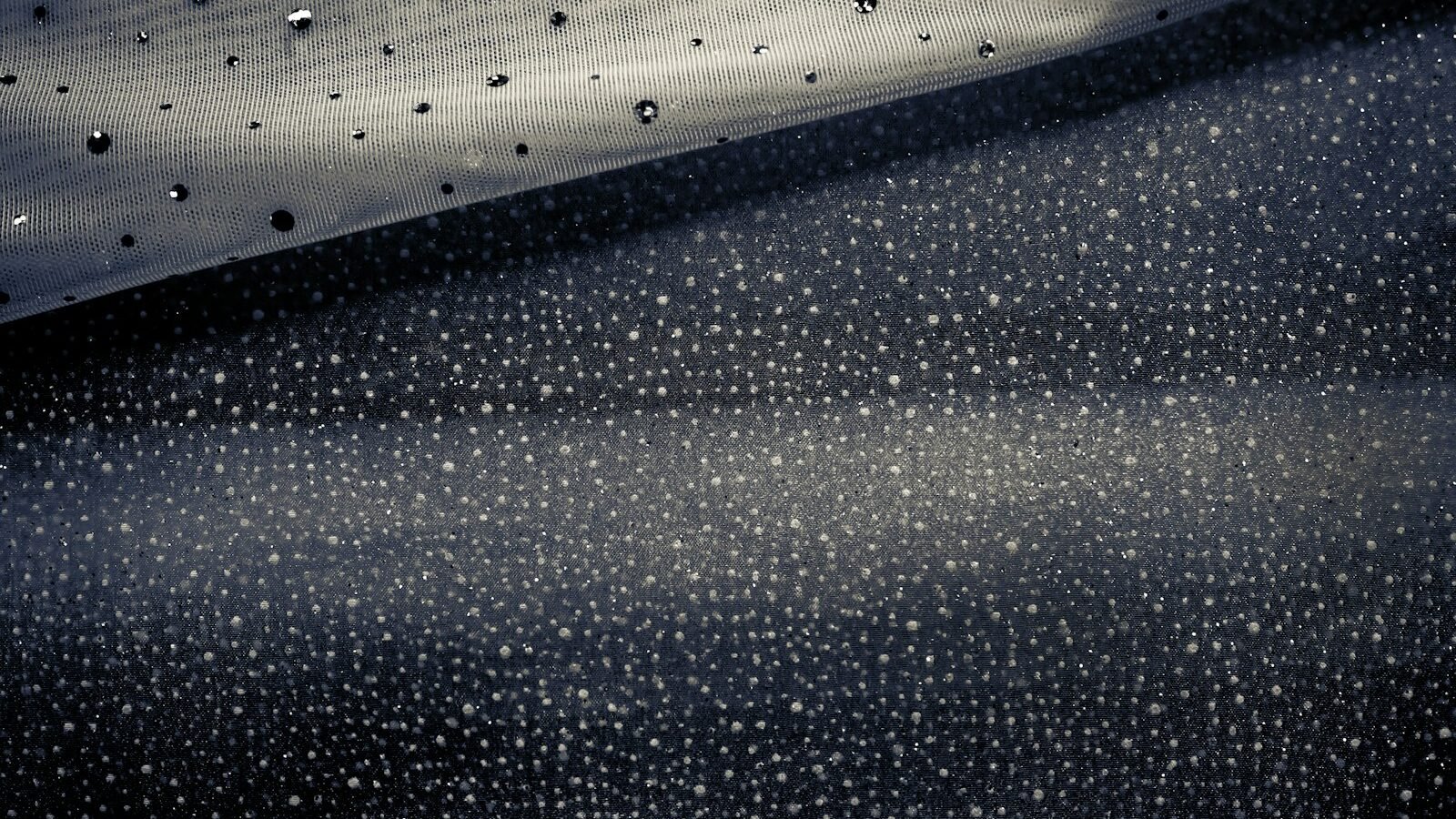
Spill a glass of water on a kitchen bench and reach for a paper towel: the water vanishes into it within seconds. Wear a waterproof jacket in the rain and the same water rolls off in round beads. Drip some onto a freshly waxed car and it gathers into tight droplets; drip it onto clean glass and it spreads into a thin film.
Whether a material welcomes water or pushes it away depends on two separate things: how strongly its surface attracts water molecules, and whether it has tiny spaces inside that water can be drawn into. Understanding both explains everything from non-stick pans to rising damp.
The short answer
- Water molecules attract each other strongly (cohesion). A surface that attracts water more than water attracts itself gets wet; one that attracts it less makes water bead up.
- Surfaces rich in polar chemical groups, such as the hydroxyl groups in cellulose, tend to be hydrophilic (water-loving). Non-polar surfaces such as waxes, oils and fluorinated plastics tend to be hydrophobic (water-repelling).
- Scientists measure this with the contact angle: below 90° counts as hydrophilic, 90° or more as hydrophobic.
- Absorption needs something extra: pores or gaps that pull water inside by capillary action.
The basic principle: a tug of war at the surface
Every water molecule is pulled on by its neighbours. Inside a droplet those pulls balance out, but at the edges they do not, which gives water its strong surface tension. That is why water left alone forms rounded droplets rather than spreading forever. (We explain this in more detail in why water forms round droplets.)
When water meets a solid, a second attraction appears: between water and the solid, called adhesion. The outcome is a tug of war:
- If adhesion to the surface is strong compared with water’s cohesion, the droplet spreads out and the surface gets wet.
- If adhesion is weak, water’s cohesion wins and the droplet pulls itself into a bead, touching the surface as little as possible.
How it works, step by step
- A droplet lands. At first it touches the surface over a small area.
- Forces compete at the edge. Along the line where water, solid and air meet, three interfaces pull against each other: solid–air, solid–water and water–air.
- The droplet settles. It spreads or contracts until those pulls balance. The angle between the solid surface and the edge of the droplet, measured through the liquid, is the contact angle.
- If the material has pores, water that wets the pore walls is drawn inward. Narrow channels between fibres or grains act like tiny tubes, pulling water along.
- Absorption continues until the pores are filled or, if water is climbing upward, until gravity balances the capillary pull.
The science behind it
Young’s equation and the contact angle
The balance of forces at the edge of a droplet on an ideal flat surface is described by Young’s equation:
cos θ = (γSG − γSL) ÷ γLG
Here θ is the contact angle, and the three γ terms are the surface energies (or tensions) of the solid–gas, solid–liquid and liquid–gas interfaces. A surface with high surface energy is “eager” to be covered, so water spreads and θ is small. A low-energy surface gives little reward for contact, so θ is large.
| Contact angle | What it means |
|---|---|
| 0° | Complete wetting: water spreads into a film |
| Below 90° | Hydrophilic |
| 90° or more | Hydrophobic |
| Up to roughly 120° | Typical upper limit for smooth, very low-energy surfaces such as fluorinated materials |
| Above 150° | Superhydrophobic: only possible with surface roughness as well as low-energy chemistry |
The 90° dividing line is a widely used convention rather than a sharp physical boundary, and researchers have pointed out that it has little deeper justification. It is still a useful way to compare surfaces.
Chemistry: polar versus non-polar
Water molecules are polar: the oxygen end carries a slight negative charge and the hydrogen ends a slight positive charge. They attract each other through hydrogen bonds, and they are attracted to other surfaces that offer polar or hydrogen-bonding groups.
- Cellulose, the main component of cotton, paper and wood, is covered in hydroxyl (–OH) groups that hydrogen-bond with water. These materials are strongly hydrophilic.
- Waxes, oils and many plastics are built mostly from carbon and hydrogen, which are non-polar. Water has little to grab onto, so they are hydrophobic.
- Fluorinated surfaces, such as PTFE, have very low surface energy and are among the most water-repellent smooth materials.
Changing the chemistry of a surface changes its behaviour. Adding polar groups lowers the contact angle and makes a surface more hydrophilic; coating it with a wax or fluorinated layer does the opposite.
Roughness amplifies the effect
Surface texture does not change whether a surface is basically hydrophilic or hydrophobic, but it exaggerates whichever it is. Roughening a hydrophobic surface makes it more hydrophobic, while roughening a hydrophilic surface makes it more hydrophilic. On some very rough, water-repellent surfaces, droplets sit on the tips of the texture with air trapped beneath them, which is how contact angles above 150° are achieved. Lotus leaves are the classic natural example.
Capillary action: how absorption happens
A surface can be wettable without absorbing anything: glass is a good example. Absorption needs internal spaces. Capillary action is the movement of water through the spaces of a porous material driven by adhesion, cohesion and surface tension. It happens when water’s attraction to the channel walls is stronger than its attraction to itself.
In a paper towel, water flows into the narrow gaps around cellulose fibres and climbs, dragging neighbouring molecules with it, until the pull of gravity balances the capillary force. Narrower channels can lift water higher. The same process moves water through soil, clay, concrete and the xylem of plants.
Real-world applications
- Towels and paper towels combine hydrophilic cellulose with a porous, fibrous structure, so water both wets the fibres and is drawn into the spaces between them.
- Rainwear often uses a durable water-repellent finish on the outer fabric so water beads up and rolls off rather than soaking in.
- Non-stick cookware uses low-surface-energy coatings so that water, oils and food adhere poorly.
- Buildings must manage capillary action. Porous materials such as brick and concrete can wick moisture upward from the ground, which is why damp-proof courses and membranes are used.
- Self-cleaning surfaces imitate the lotus leaf, using roughness plus water-repellent chemistry so rolling droplets pick up dirt.
Common misconceptions
“Waterproof and water-repellent are the same”
A water-repellent surface makes water bead up, but water can still pass through gaps if pressed hard enough or given time. A waterproof material blocks water passage altogether, usually with a continuous membrane or coating.
“Hydrophobic materials do not attract water at all”
There is still some attraction between water and almost any surface. Hydrophobic simply means water is more attracted to itself than to the surface, so it minimises contact.
“If something gets wet, it absorbs water”
Wetting is about the surface; absorption needs pores or a material that takes water into its structure. Clean glass wets easily but absorbs nothing.
Limitations and exceptions
- Real surfaces are messy. Young’s equation assumes a smooth, clean, uniform surface. Real surfaces have roughness and contamination, so a droplet’s advancing and receding angles differ, a behaviour called contact angle hysteresis.
- Contamination changes everything. A thin film of grease can make glass shed water; detergent residue can make a water-repellent fabric wet out.
- Coatings wear. Water-repellent finishes on fabrics and car paint degrade with abrasion, washing and sunlight, so their effect fades.
- Absorbent materials can be damaged. Materials that absorb water may swell, weaken or rot. In buildings, persistent damp should be assessed by a qualified professional.
Frequently asked questions
Why does water bead on a freshly waxed car?
Car wax is non-polar and has low surface energy. Water is more attracted to itself than to the wax, so it pulls into beads with a high contact angle.
Why do new towels sometimes absorb poorly?
Finishing treatments and softeners on new textiles can coat the fibres and make them less hydrophilic. Washing usually removes much of the coating.
Can a surface be made to switch between hydrophilic and hydrophobic?
Yes. Chemical treatments, coatings and changes in surface texture can all shift the contact angle. Researchers also study surfaces whose wettability changes in response to light, temperature or electric fields.
How does water climb up a paper towel against gravity?
Water adheres to the cellulose fibres and is pulled into the narrow spaces between them by capillary action. It keeps rising until the weight of the lifted water balances the capillary pull.
References
- Tel Aviv University, Physical Chemistry Laboratory. Surface Tension (Young’s equation, hydrophilic and hydrophobic definitions, effect of roughness).
- On the nature of wettability of van der Waals heterostructures, Supplementary Information. arXiv:1512.04110.
- U.S. Geological Survey, Water Science School. Capillary Action and Water.
- The Physics Classroom. Capillary Action.
- Nanoscience Instruments. Contact Angle Measurements and Wettability.
- Wikipedia contributors. Contact angle.
Header photo: Tim Mossholder on Unsplash.