Answer Engine Optimization (AEO): Writing for AI Search, Not Just Google

Answer Engine Optimization, commonly abbreviated AEO, has emerged as one of the most discussed new terms in the SEO industry over the past two years — a response to the reality that search is no longer solely about ranking in a list of links, but increasingly about being selected as the direct answer within an AI-generated response, whether that’s Google’s AI Overviews, a chatbot like ChatGPT or Gemini, or a dedicated answer engine like Perplexity. This guide breaks down what AEO actually means in practice, and how it relates to (rather than replaces) traditional SEO.
What AEO Actually Means
Answer Engine Optimization refers to the practice of structuring and writing content specifically to be identified, extracted, and cited as a direct answer by AI-driven search and question-answering systems. Where traditional SEO has historically focused on earning a high position in a list of ranked links, AEO focuses on earning a place as the actual answer itself — whether that answer is displayed in Google’s AI Overview, spoken by a voice assistant, or referenced by a conversational AI tool.
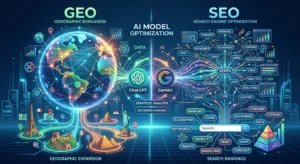
It’s worth being precise about the relationship between AEO and traditional SEO, because there’s been some hype-driven overstatement in the industry suggesting AEO is an entirely separate discipline requiring fundamentally different tactics. Google’s own official guidance, published in 2026, explicitly clarified that this isn’t accurate — AEO (and the related term GEO, Generative Engine Optimization) remain part of the same underlying SEO fundamentals, applied with an awareness of how generative systems consume and synthesize content.
Why AEO Has Become a Distinct Area of Focus
Even though AEO shares its foundation with traditional SEO, there are genuine differences in how content needs to be structured to perform well specifically for answer extraction, as opposed to simply ranking well in a traditional results list:
Directness matters more. A traditional blog post might build up context gradually before arriving at its core point — a structure that works fine for a human reader scrolling through a ranked page, but which can make it harder for a generative system to identify and extract a clean, direct answer.
Specific questions need specific, standalone answers. AI systems often need to answer a narrow, specific sub-question, which means content addressing several related but distinct questions benefits from clearly separating each one with its own heading and direct answer, rather than blending them together in flowing prose.
Extractability is a genuine, additional consideration. Beyond simply being accurate and well-written, content that performs well for AEO tends to be structured so that a single paragraph or sentence can be lifted cleanly as a complete, accurate answer without requiring surrounding context to make sense.
Practical AEO Writing Techniques
Lead with the direct answer
For any heading framed as a question, provide a clear, complete answer in the first sentence or two immediately following it, before expanding into supporting detail, examples, or nuance. This “answer-first” structure serves both AEO and general readability — it respects a reader’s time while also giving a generative system a clean, extractable answer.
Use question-based headings that mirror real search queries
Rather than a vague heading like “Considerations,” use the actual question a person would type or ask — “How long does SEO take to show results?” — which both improves traditional on-page relevance and increases the likelihood of being matched to that specific query by a generative system.
Keep each answer self-contained
Write direct-answer paragraphs so they make sense even if extracted in isolation, without requiring the reader to have absorbed several preceding paragraphs of context. This doesn’t mean sacrificing depth elsewhere in the piece — it means ensuring the core answer itself doesn’t depend entirely on surrounding context to be accurate or complete.
Include specific facts, figures, and definitions
Generative systems tend to favor content that states things clearly and specifically rather than vaguely. A precise definition, a specific number, or a clearly stated step in a process is more useful — and more likely to be extracted — than a general, hedge-filled description.
Structure comparison and list content clearly
For content comparing options or outlining steps, using genuine structural elements (numbered lists, clear comparative headings) rather than embedding the comparison purely within paragraph text makes both human scanning and AI extraction significantly easier.
AEO and FAQ Sections
FAQ-style sections, where genuinely relevant, remain one of the most direct and effective AEO techniques, precisely because they’re built around the exact structure generative systems are designed to work with: a specific question, followed immediately by a direct, self-contained answer. This is worth using where it genuinely serves the reader, though it shouldn’t be forced onto content where it doesn’t naturally fit — Google’s guidance has been clear that formatting for its own sake, without genuine content value, isn’t the priority.
How AEO Relates to Featured Snippets
AEO shares significant conceptual overlap with the older practice of optimizing for featured snippets — the highlighted, extracted answer boxes that have appeared in Google search results for years before AI Overviews existed. Many of the same techniques apply: direct answers, clear structure, and specific, extractable statements. The key difference is scale and sophistication — AI Overviews and conversational AI systems synthesize across multiple sources simultaneously, rather than lifting a single snippet from a single page, which places even more weight on genuine content quality and originality relative to competing sources.
Common AEO Mistakes
Sacrificing genuine depth for extractability. Some content creators, in an attempt to over-optimize for AEO, produce shallow content consisting almost entirely of short, disconnected question-and-answer pairs with little genuine substance behind them. Google’s emphasis on non-commodity, original content applies here too — extractable structure without genuine depth and originality is unlikely to perform well.
Forcing an unnatural FAQ format onto content that doesn’t need it. Not every piece of content benefits from a rigid question-and-answer structure; forcing it where it doesn’t fit can make content feel mechanical and reduce its overall quality and readability.
Chasing unverified technical tricks. As with AI Overview optimization broadly, unusual and unconfirmed technical tactics (artificial content chunking, invented schema formats) are not confirmed to meaningfully help and risk distracting from genuine content quality improvements.
Frequently Asked Questions
Is AEO a completely separate discipline from traditional SEO?
No — Google’s own guidance has clarified that AEO and the related concept of GEO remain part of the same underlying SEO fundamentals, with an added emphasis on direct, extractable structure and genuine content originality.
Does optimizing for AEO hurt traditional keyword rankings?
Not inherently. Clear, well-structured, direct writing tends to perform well for both traditional rankings and AI extraction simultaneously, since both ultimately reward content that clearly and accurately answers the searcher’s actual question.
Should every page be restructured into a Q&A format for AEO?
No. AEO principles — leading with direct answers, using clear headings, structuring content logically — can be applied without converting every page into a rigid FAQ format; the goal is clarity and extractability, not a specific rigid template.
Final Thoughts
AEO isn’t a replacement for SEO, or a set of clever new tricks — it’s a natural extension of long-standing best practices (clarity, direct answers, genuine substance) applied with an explicit awareness that AI systems, not just human readers scanning a page, are increasingly the audience deciding whether your content gets surfaced and cited. Writing clearly, structuring content logically, and ensuring genuine originality continues to be the most reliable path forward, regardless of which specific system — traditional search, an AI Overview, or a conversational assistant — ends up delivering your content to the person who needs it.
For the Google-specific side of this topic, see our guide to how AI Overviews choose what to cite.