Why Does Bread Go Stale?
Stale bread is not just dried-out bread. Here is how starch slowly recrystallises, why the fridge makes it worse, and why freezing and reheating help.
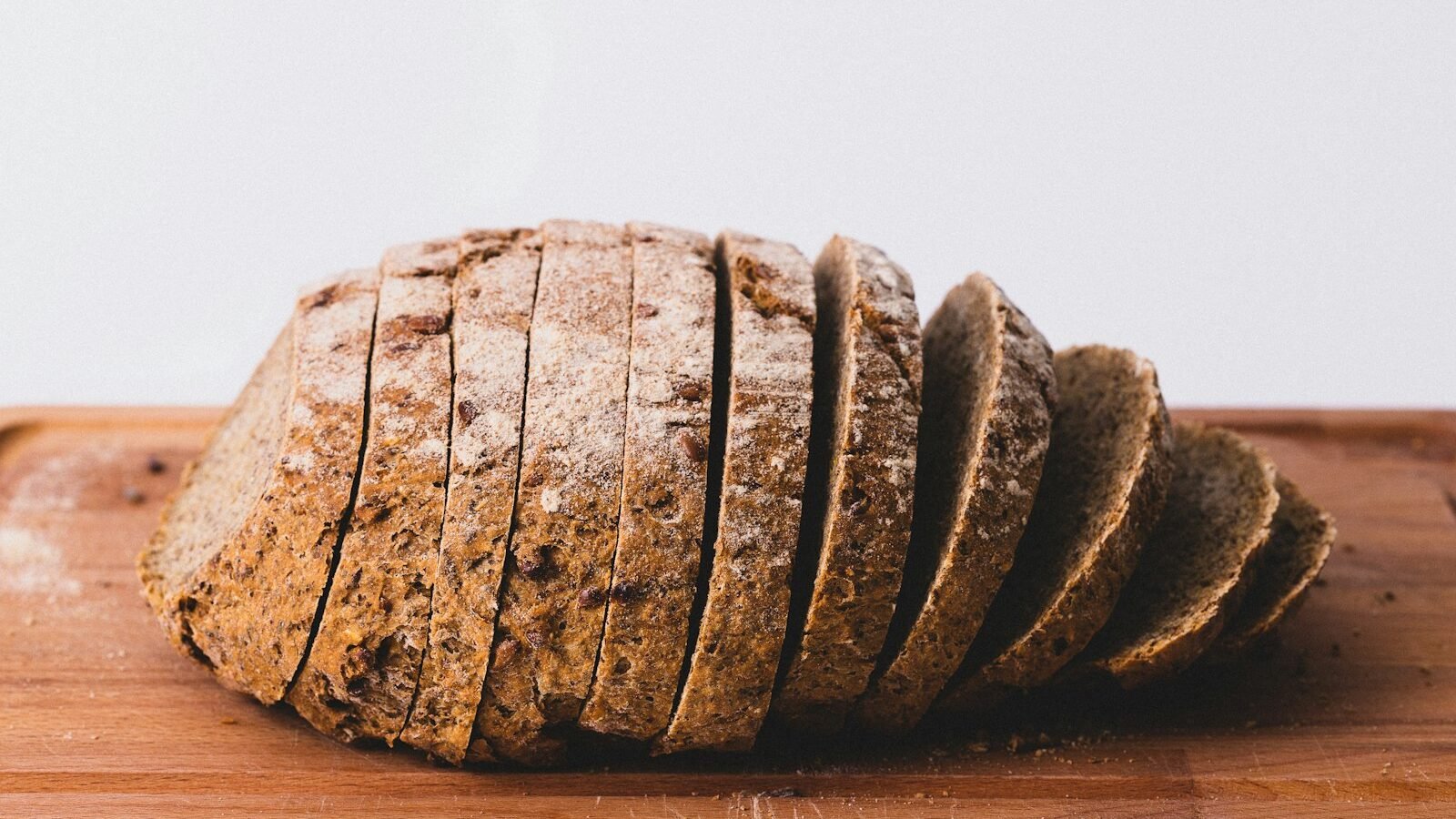
A loaf that was soft and springy yesterday is firm and crumbly today, even though it has been sealed in its bag. Put it in the fridge to keep it fresh, and it seems to go stale even faster.
Stale bread is not simply bread that has dried out. The main change happens inside the starch itself, which slowly reorganises into a more ordered, crystalline structure. This process, called starch retrogradation, explains why the fridge is a poor place for bread, why the freezer works so well, and why a few minutes in a warm oven can bring a loaf back to life.
The short answer
- Baking swells and disorders the starch in flour. As bread cools and ages, the starch molecules slowly realign and crystallise. This is retrogradation.
- Water moves out of the starch granules into the spaces around them, and the crumb becomes firm and dry-feeling even if little water has been lost to the air.
- Staling is fastest at fridge temperatures, just above freezing. Freezing greatly slows it.
- Gentle reheating to around 60 °C partly reverses staling, but only for a short time.
The basic principle: starch that “remembers” its order
Flour contains starch in the form of tiny, tightly packed granules made of two molecules: amylose, a mostly straight chain, and amylopectin, a highly branched one. In the raw granule, parts of these molecules are arranged in an orderly, partly crystalline way.
When dough is baked, water and heat make the granules swell and the ordered structure falls apart. This is gelatinisation, and it gives fresh bread its soft, moist crumb. But the disordered state is not stable. As the bread cools and sits, the starch chains gradually line up again and form new crystalline regions. The crumb firms up as these regions grow. That is staling.
How it works, step by step
- Baking. Starch granules absorb water and swell; their internal order breaks down.
- Cooling. Amylose chains, which are straighter, begin to associate quickly. This sets the structure of the loaf within hours.
- Ageing. Over the following days, the branched amylopectin slowly recrystallises. This is the main cause of the firm, leathery texture of stale bread.
- Water redistribution. As the starch tightens up, water moves out of the starch granules into the spaces between them, and in bread with a crust, moisture also moves from the crumb towards the crust.
- Perceived dryness. The crumb feels dry and crumbly even though much of the water is still in the loaf, and the crust turns leathery as it absorbs moisture.
The science behind it
Why the fridge speeds staling
Crystallisation needs two things: new crystals must form (nucleation), and existing crystals must grow. Low temperatures near the starch’s glass transition favour nucleation, while growth needs enough molecular mobility. Fridge temperature, around 4 °C, turns out to be a near-ideal compromise for both. A study of wheat bread stored at different temperatures found that the rate of starch retrogradation was highest at 4 °C among the conditions tested.
| Storage temperature | What happens to the starch | Practical result |
|---|---|---|
| About 25 °C (room temperature) | New crystals form and existing ones grow | Stales over a few days |
| About 4 °C (refrigerator) | New crystals form and grow; highest retrogradation rate in the study | Stales fastest |
| About −18 °C (freezer) | Only slow crystal growth; water activity stayed almost constant for 23 days | Staling largely paused |
The table summarises one laboratory study. Exact rates vary with the recipe, the flour and the loaf size, but the overall pattern, that the fridge accelerates staling and the freezer slows it dramatically, is well established.
Why reheating helps, briefly
The new starch crystals in stale bread are weak. Heating the bread to around 60 °C melts many of them, so the crumb softens again. But once the bread cools, retrogradation starts over and the crumb firms up again. Refresh only as much as you plan to eat straight away.
Staling is not spoilage
Staling changes texture, not safety. Mould growth is a separate process caused by fungi, and it is what makes bread unsafe to eat. That is the one advantage of the fridge: it slows mould, even though it speeds staling.
Real-world applications
- Freezing fresh bread. Bread frozen while still fresh, ideally sliced so you can take out what you need, thaws to a near-fresh texture.
- Anti-staling ingredients. Commercial bakers use enzymes, extra wheat gluten and emulsifiers such as mono- and diglycerides to slow retrogradation and extend shelf life.
- Toasting. Toasting stale bread heats it well above the temperature where starch crystals melt and also crisps the surface, which is why day-old bread makes good toast.
- Cooking with stale bread. Firm, retrograded bread holds its shape better in dishes such as bread pudding, croutons and stuffing.
- Other starchy foods. Similar retrogradation happens in other cooked starchy foods, such as steamed buns, which researchers have studied in the same way. It is a different process from the oxidation that makes rubber hard and brittle, although both are cases of a material changing its structure over time.
Common misconceptions
“Bread goes stale because it dries out”
Drying contributes, but bread stales even when kept in a moist environment. The main cause is the starch recrystallising inside the crumb, which is why a well-sealed loaf still goes stale.
“The fridge keeps bread fresher”
The fridge slows mould but speeds staling. For texture, room temperature is better for a day or two, and the freezer is best for longer storage.
“Once bread is stale, it cannot be rescued”
Staling is partly reversible. Warming bread to around 60 °C softens it again for a short time, which is why a stale roll can taste fresh straight out of a warm oven.
Limitations and exceptions
- Recipes differ. Breads made with anti-staling ingredients, as many commercial sliced loaves are, stale more slowly than simple lean loaves.
- The crust matters. In bread with a crust, the crust draws moisture from the crumb, which adds to the firming of the crumb.
- Food safety. Mould, not staling, is what makes bread unsafe. If bread shows visible mould, follow your local food safety authority’s advice; many advise throwing the whole item away rather than cutting off the mouldy part.
Frequently asked questions
What is the best way to store bread?
Keep it at room temperature in a bread bag or bin for a day or two. For longer, slice and freeze it, then toast or thaw slices as needed. Avoid the fridge unless mould is a bigger concern than texture, for example in very hot, humid weather.
Why does toast made from frozen bread taste fine?
Freezing pauses most staling, and toasting heats the slice well above the temperature where starch crystals melt, so the texture is close to that of fresh bread.
Why does a microwaved roll go hard so quickly afterwards?
Microwaving warms the bread and melts starch crystals, but it also drives off moisture. As the roll cools, retrogradation restarts in a drier crumb, so it firms up quickly. Eat it straight away.
Is stale bread safe to eat?
Staling on its own does not make bread unsafe; it changes the texture. Mould is the safety concern. Stale bread without mould is fine to toast or use in cooking.
References
- Wikipedia. Staling.
- Aguirre JF, Osella CA, Carrara CR, Sánchez HD, Buera MP. Effect of storage temperature on starch retrogradation of bread staling. Starch/Stärke. 2011.
- Li C, Shao S, Yi X, et al. Influence of storage temperature on starch retrogradation and digestion of Chinese steamed bread. Foods. 2024.
Header photo: Jude Infantini on Unsplash.