How Do Noise-Cancelling Headphones Work?
Noise-cancelling headphones fight sound with sound. Here is how anti-noise and destructive interference work, and why engine hum vanishes but voices still get through.
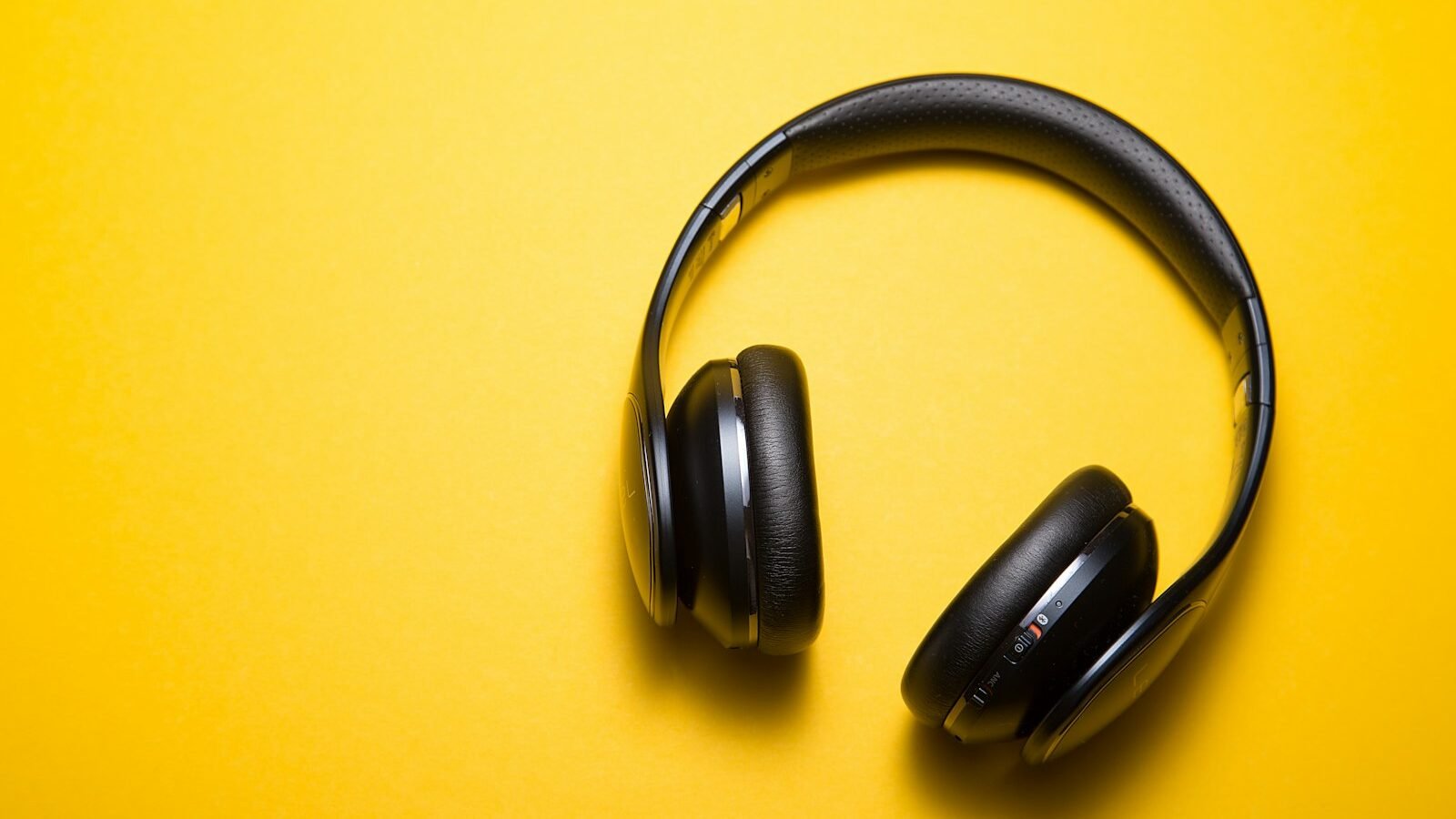
Put on a pair of noise-cancelling headphones on a plane and the deep roar of the engines seems to melt away. Yet voices nearby, a baby crying or a clattering trolley still come through surprisingly clearly.
That contrast is the key to how the technology works. Noise-cancelling headphones do not just block sound; they create new sound designed to cancel the noise. That trick works brilliantly on some sounds and poorly on others, and the reason comes down to wavelength and timing.
The short answer
- Sound is a pressure wave. If you add a second wave with the same shape but flipped upside down (inverted phase), the two cancel out. This is destructive interference.
- Active noise-cancelling headphones use microphones to measure incoming noise and a small speaker to play the inverted “anti-noise”.
- The cancellation works best on steady, low-pitched sounds such as engine hum, where the waves are long and predictable.
- High-pitched and sudden sounds are much harder to cancel, so headphones rely on padding and a good seal to block them passively.
The basic principle: adding a wave to its mirror image
Sound travels through air as tiny, rapid changes in pressure. A pure tone is a regular pattern of high-pressure peaks and low-pressure troughs. If two sound waves meet, their pressures add together.
When a peak from one wave lines up with a trough from another of equal size, they sum to zero and the sound disappears at that point. This is destructive interference. Active noise control, the technology inside noise-cancelling headphones, deliberately produces a wave with the same amplitude as the unwanted noise but with its phase inverted, so that the two combine and cancel.
The idea is older than most people expect. Paul Lueg received a US patent for cancelling sound in 1936, and engineers developed noise-cancelling systems for aircraft cockpits in the 1950s. The first commercial active noise-reduction headsets appeared in the late 1980s.
How it works, step by step
- Listen. A microphone on the ear cup picks up the noise around you. Some designs also have a microphone inside the cup to hear what actually reaches your ear.
- Analyse. A signal processor measures the noise and predicts what will arrive at your ear a fraction of a millisecond later.
- Invert. The processor generates a signal that is the mirror image of that noise.
- Play. The headphone driver plays the anti-noise together with your music or call audio.
- Correct. The system keeps adjusting, using adaptive algorithms, as the noise and the fit of the headphones change.
The science behind it
Why low frequencies are easier
The wavelength of a sound is the speed of sound divided by its frequency:
wavelength = v / f
Taking the speed of sound in air as about 343 m/s, the approximate wavelengths are:
| Frequency | Example | Approximate wavelength |
|---|---|---|
| 100 Hz | Engine or air-conditioning hum | 3.4 m |
| 500 Hz | Low voices, road noise | 69 cm |
| 1,000 Hz | Middle of the speech range | 34 cm |
| 4,000 Hz | Sharp, hissy sounds | 8.6 cm |
A 3-metre-long wave changes slowly and fairly evenly across the whole ear cup, so a single small speaker can match it. A wave only a few centimetres long varies from point to point around the ear, and from moment to moment, so a single anti-noise signal cannot match it everywhere. Above about 1,000 Hz, sounds arriving from different directions start to cancel and reinforce unpredictably.
Why timing matters so much
Any delay in the electronics shifts the anti-noise slightly out of step with the noise. A time delay produces a phase error that grows with frequency:
phase error (degrees) = 360 × f × delay
For a delay of 0.1 milliseconds, this gives about 3.6° at 100 Hz but 36° at 1,000 Hz. When two equal waves are out of step by an angle φ, the remaining sound has a relative amplitude of 2 × sin(φ / 2). Approximate worked results:
| Frequency | Phase error from a 0.1 ms delay | Remaining amplitude | Approximate reduction |
|---|---|---|---|
| 100 Hz | 3.6° | about 6% | about 24 dB quieter |
| 1,000 Hz | 36° | about 62% | about 4 dB quieter |
These are idealised numbers for a single steady tone. They show why the same tiny delay that barely matters for engine hum almost wipes out the benefit for mid-range sounds. Real headphones use prediction and fast processing to reduce delay, but the physics still favours low frequencies.
Passive blocking fills the gap
Because active cancellation struggles with higher frequencies, good headphones combine it with passive isolation: dense ear cushions and a tight seal that physically block sound. Passive materials are most effective at high frequencies, so the two methods complement each other.
Real-world applications
- Headphones and earbuds for travel, commuting and open-plan offices.
- Aviation headsets, where cockpit noise is loud, low-pitched and steady.
- Cars and aircraft cabins, which use multiple speakers and microphones to reduce periodic noise from engines, propellers or rotors.
- Ducts and mufflers, where anti-noise can reduce low-frequency rumble in air-conditioning systems and exhausts.
- Phones, which use several microphones to separate your voice from background noise during calls. All of this electronics runs on battery power, and battery ageing gradually shortens how long the cancellation lasts; see why batteries lose capacity.
Common misconceptions
“Noise cancelling blocks all sound”
It mainly reduces low, steady sounds. Speech, alarms and sudden noises are reduced mostly by the passive seal, so you will still hear them, just more quietly.
“The headphones simply play white noise to mask sounds”
Masking adds sound on top of noise to make it less noticeable. Active cancellation does the opposite: it adds a carefully shaped signal that removes some of the noise energy at your ear.
“Cancelling sound means destroying energy”
Energy is not destroyed. The cancellation happens in a small region, near your eardrum. Elsewhere, the waves can add up differently, which is why cancelling sound for a whole room is far harder than doing it inside an ear cup.
Limitations and exceptions
- Fit matters. A poor seal, glasses arms or hair under the ear cushions let in sound that the system was not designed for.
- Wind and sudden noises are unpredictable and are handled much less well than steady hum.
- Hearing safety. The World Health Organization’s safe-listening guidance for adults is a weekly sound dose equivalent to 80 dB for 40 hours. Lower background noise makes it easier to keep the volume down. If you notice ringing in the ears or muffled hearing, have your hearing checked by a qualified audiologist.
- Awareness. Reducing outside noise can hide traffic and warning sounds. Use transparency or ambient modes, or take the headphones off, when walking near roads or working around machinery.
Frequently asked questions
Why do I still hear people talking?
Speech sits mostly in the mid and high frequencies, where active cancellation is much weaker. The ear cushions reduce it, but they cannot remove it.
Do noise-cancelling headphones protect my hearing?
They can help indirectly, because lower background noise lets you listen at a lower volume. They are not certified hearing protection for loud workplaces, which need properly rated earmuffs or earplugs.
Why does noise cancelling work better on planes than in a café?
Aircraft cabin noise is loud, low-pitched and steady, which is ideal for anti-noise. Café noise is a mix of voices and clattering, which is higher-pitched and unpredictable.
Does noise cancelling use more battery?
Yes. The microphones, processor and extra speaker output all need power, so turning noise cancelling off usually extends battery life.
References
- Wikipedia. Active noise control.
- World Health Organization and International Telecommunication Union. Safe listening devices and systems: a WHO-ITU standard.
Header photo: C D-X on Unsplash.